Showing posts with label Janie Hampton. Show all posts

French view of the First World War by Janie Hampton

During the last four years we have seen the First World War from many angles. But how did the French see it? A few years ago I found two large-format bound volumes of the magazine L’Illustration in the street with a notice ‘Take Me’. Being an obedient citizen, I did. And then wondered what to do with them. Now I am glad I did not throw them out.  My school French can read the titles and the subject matter but not the detail. So I share with you some of the 100s of illustrations, drawn and photographed.

A fictional village in Alsace the day after German occupation
- suddenly the residents are very patriotic
French soldiers crossing the Canal d'Yser under fire....
..while officers of several armies enjoy life in the Café du Paix in Paris...
...and their daughters play in the Bois de Boulogne...

...and refugee children from the North hope for morsels of food.

Aeroplanes were a new weapon of war..
...but the French Army relied on donkeys for transport in the trenches.
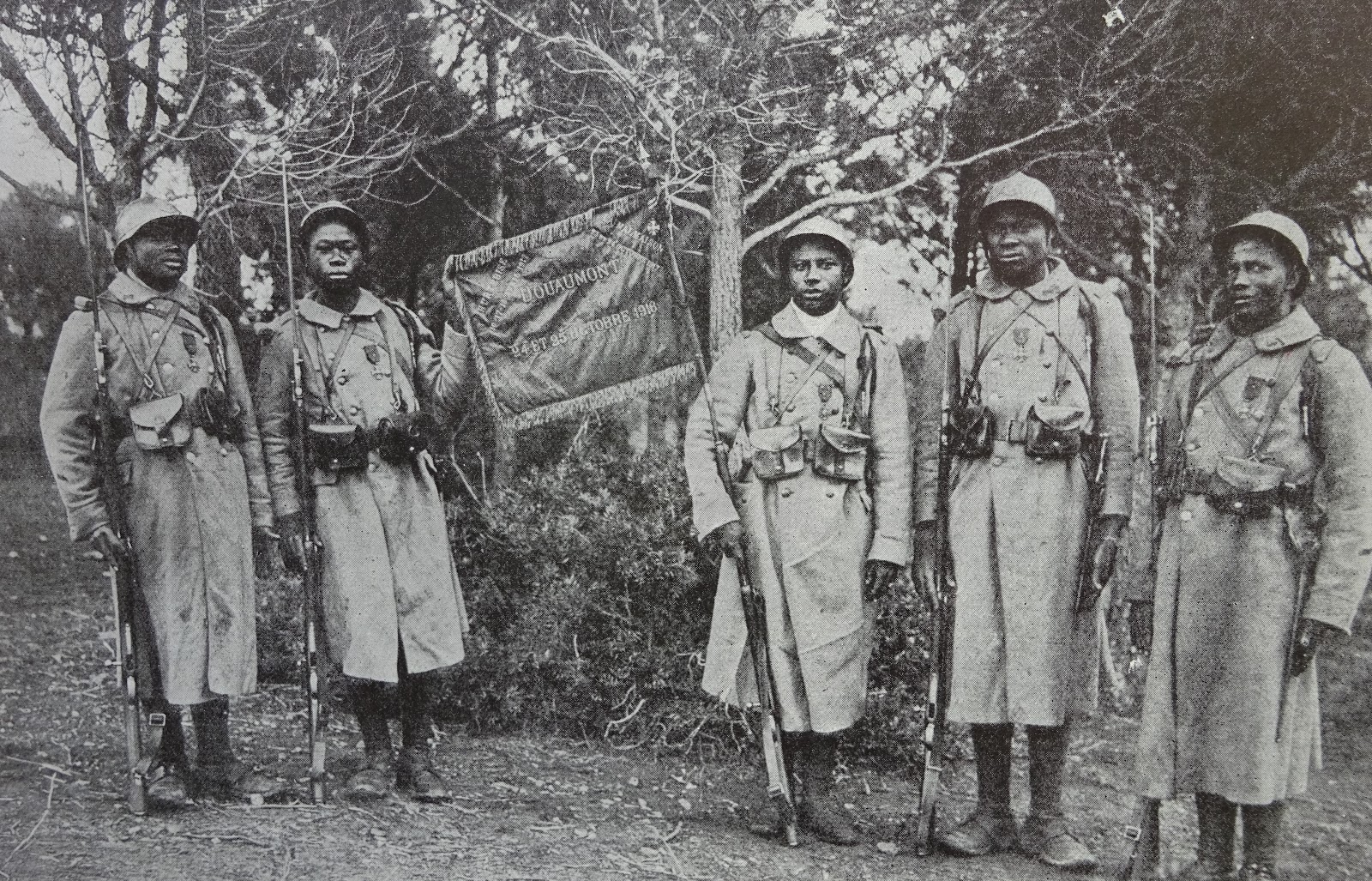
...and reinforcements from the 43rd Battalion of Senegal.
L’Illustration dealt with subjects other than war, including the dangers of high heels (with X-Rays of damaged ankles to prove it); how to bottle apples; and the Russian Revolution (the editor of L’Illustration did not seem to like the Bolsheviks). In December 1918, advertisements reappeared on the back page. 
At the end of the war, there were celebrations across France. 
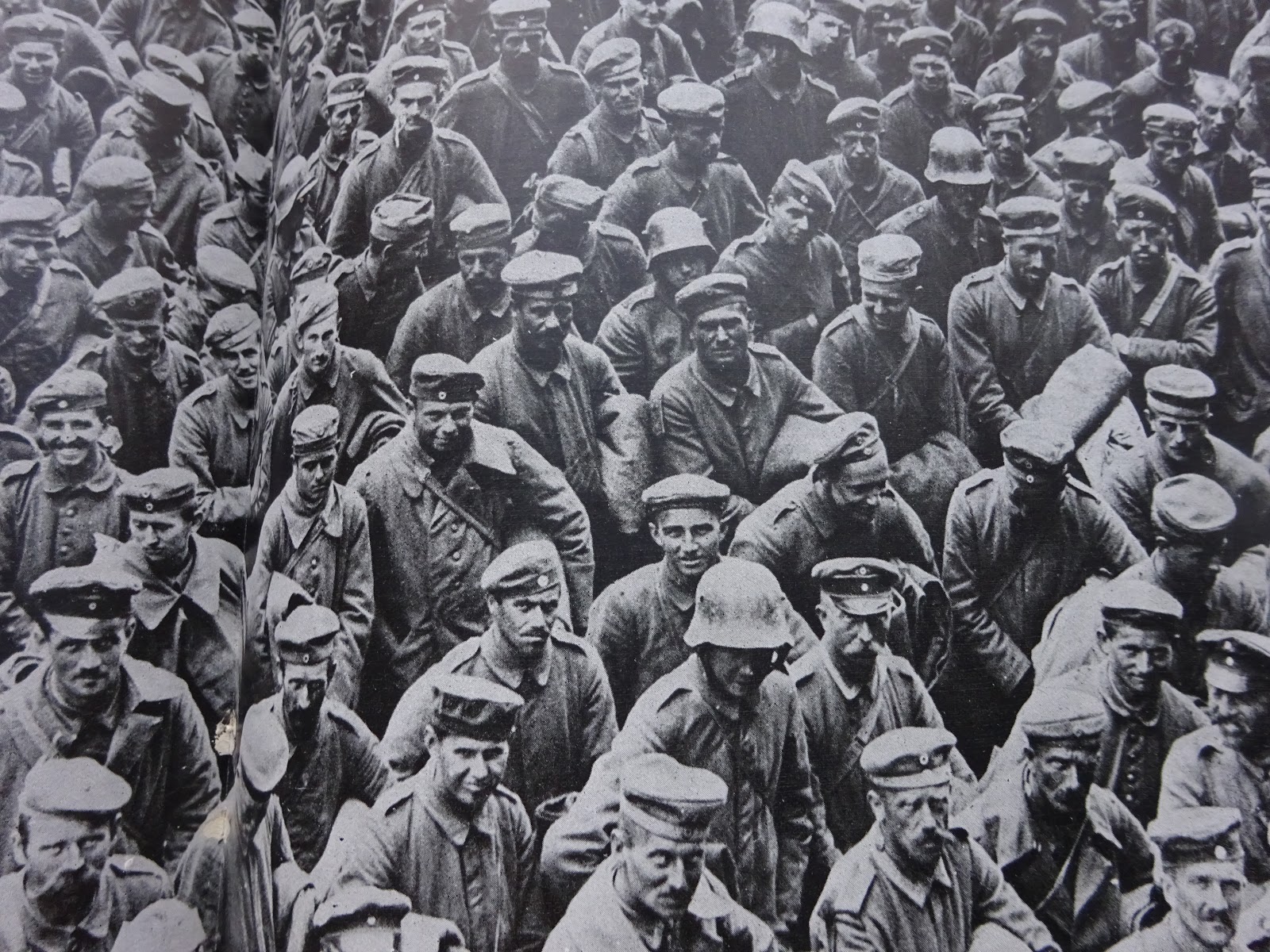
..while German prisoners-of -war wondered 'What next?'
Nearly 130,000 prisoners were taken at La Somme in August 1918.
France, depicted as a lovely woman, thanks a French soldier for saving her....
..while a surprised 'America' glares at a conquered 'Germany'.
After the war, soldiers rescued a bronze sculpture of  Eve, made by Auguste Rodin
in 1881 and buried in a garden in Douai, northern France
The British Prime Minister Lloyd George was awarded a double-page  portrait on the last page of L'Illustration 1918.
www.janiehampton.co.uk

A Norfolk Wedding by Janie Hampton

The Norfolk wedding of Rachel Gurney & Rosslyn Bruce, 1908

Just one hundred and ten years ago this month my grandmother, Rachel Gurney married Rosslyn Bruce at Northrepps in Norfolk. Rachel, aged 21, was the oldest daughter of untitled landed gentry, and Rosslyn, 37, the 7th child of a poor but well-connected vicar. Both of them were descended from 11th Century Norman invaders. They met after Rosslyn, the rector of a Nottingham parish, broke his leg out fox-hunting and was sent by his best friend, a socialist MP called Noel Buxton, to convalesce with Buxton’s cousins, the Gurneys of Northrepps.
Rosslyn and Rachel fell in love. But it was not always easy. When Rachel’s nerves became frayed during their wedding preparations, she wrote to Rosslyn, ‘You Bruces are quite unordinary in your huge amount of love. I have got mine in me, only I can’t show it like you do.’ Rosslyn replied offering ‘double thoughtfulness, in thoughtful devotion, in not being too outwardly devoted.’ Rachel replied, ‘You don’t understand a bit… because you haven’t always lived in the same house with the same mother all your life and you are not very young like me, and you know all about the great world and I don’t.’ 
The bridal carriage was pulled by two new horses called
Bryant & May - because they were such a good match.
As Rachel and her brother Quintin trotted in the family carriage and pair through the village festooned with bunting, Quintin asked her, ‘I suppose you know the facts of life? Because I don’t.’
The year was 1908 and the Eastern Daily Press reported: ‘Never before had the inhabitants seen so large a number of such beautifully appointed and powerful motor cars. Within the church, the pulpit was treated with chrysanthemums.’ 
'Miss Gurney's wedding, bridesmaids, page's and travelling costumes' in The Queen
Rachel’s wedding dress of white, silk satin was described by her mother Evelyn in the Parish Magazine: ‘made en princesse, with a Court train of satin, it was lined with masses of chiffon. Over a myrtle wreath was a veil of lovely old Brussells lace, which had been worn by her mother and grandmother. She carried a choice bouquet of lilies, carnations and stephanotis.’ Her seven adult bridesmaids, all sisters or cousins, wore huge hats swathed with tulle and their trailing bouquets were attached to shepherd’s crooks. The two page boys wore scarlet woolen Peter Pan suits, in homage to Rosslyn’s friend, James Barrie. Rosslyn’s uncle who was a Bishop, aided by three other related parsons, took the service. The 14th century flint church was packed.
The bridal party (the groom still limping) left the church under a crimson striped awning. Evelyn conveyed the scene: ‘Brilliantly coloured beech leaves were showered upon the bride from baskets carried by children of the Sunday school’ in new scarlet woolen cloaks. ‘Meantime the wedding bells were firing away and ringing a merry peal.’ An arch of evergreen had been erected over the road bearing the mottoes ‘Health and Happiness to the Bride and Bridegroom’ and ‘God Bless You Both’. At the entrance gate to the bride’s home, Northrepps Hall, was another one reading ‘Joy and Happiness to Both’ and 'Success to Bride and Bridegroom'. 
The evergreen arch leading to the bride's home, Northrepps Hall.
After a reception in a marquee in the walled garden, the couple left for a five-week honeymoon in Italy. Thomas Cook’s first-class train tickets to Lugano cost £30 for two.
A few days later the villagers were invited to tea in the marquee to look at the presents. They included a silver tea pot from the parish committee, a travelling clock from the church choir and silver sugar tongs from the Sunday school. Rosslyn gave Rachel an upright Bechstein piano; she gave him a watch and a shooting stick. Rachel’s mother gave her a trousseau costing £404 and 2 shillings, which included three riding habits, six pairs of hunting boots, and enough serge suits, cloaks, combinations (knickers) and flannel nightgowns to last her entire life. Mrs Carter, the coachman’s wife was paid a pound for marking bodices, linen and 96 pairs of stockings. I inherited one of the dozen hand-embroidered white lawn night-gowns and wore it while ‘lying-in’ after the birth of my babies.
As a child, I watched my granny gardening in one of the Sunday School’s scarlet woolen cloaks. Beside her front door was a myrtle bush grown from her wreath, which she claimed came from the bush at Osborne House grown from Queen Victoria’s wedding wreath.

Rachel's satin wedding shoes and gloves, on the Sunday School cloak.
Just 63 years later I was married in the same Norfolk church; and two months after that Rachel’s funeral was held there too. At both events, the packed congregation included three of Rachel’s bridesmaids, and we all sang ‘All Things Bright and Beautiful’.
The completed Bruce family at Northrepps in 1920.
Verily, Erroll, Rhalou, Lorema and Merlin.

www.janiehampton.co.uk


Frida Kahlo at the V&A by Janie Hampton

Frida Kahlo 1907-1954 

Image courtesy of Museo Frida Kahlo.
© Diego Rivera and Frida Kahlo Archives, Banco de México. 
My oldest grand-daughter, Matilda, is 9 and a self-confessed ‘Victorian Expert.’ So for a summer holiday treat we went to the Victoria & Albert museum in London. After splashing in the fountain and admiring the Victorian frocks, we queued for the Frida Kahlo exhibition.
Matilda was fascinated by the surreal self-portraits with Kahlo’s signature mono-brow, painted using a mirror attached to her bed. After a near-fatal bus crash at 18 years, she was in constant pain and unable to walk. ‘She was a woman that suffered many injuries but who was able to transform this pain into art,’ wrote Hilda Trujillo, Director of the Museo Frida Kahlo. 
“I’d rather sit on the floor of the market of Toluca,” said Kahlo,
“and sell tortillas than have anything to do with those artistic bitches.”
Now her image sells like hot tortillas. photo Nikolas Muray, 1939.
As well as Kahlo’s own distinctive paintings, the exhibition includes masses of votives - small, primitive paintings on tin. Mexican Catholics with sick relatives hoped that by placing them in a church, the relatives would recover. I wondered if this would also work in the V&A? Though most had presumably died already. 
When Kahlo herself died in 1954, all her possessions were locked in a bathroom at her home, La Casa Azul, in Mexico City by her husband, the artist Diega Rivera, (1886 –1957). By the time it was finally opened in 2004, she was already a cult figure, so everything was conserved to archaeological standards. Trujillo wondered if it was right to intrude after so long. ‘At times I thought I wasn't entitled to do this, that no-one was. However, it was also important to restore, rescue the letters and photographs [which] had been left as they were, frozen in time.’ They have yet to restore all the 22,000 documents and 300 items of Frida's clothing and textiles.
However, many are now on display at the V&A, having left Mexico for the first time. Being housebound, Kahlo painted everything around her, including the plaster corsets she had to wear to support her spine. It’s sad to see the one she painted with an unborn baby– knowing that she never bore a live child.
Kahlo’s laced boots are gorgeous - red leather, with stacked platform heels and Chinese embroidery along the side. But one boot is prominently displayed on the prosthetic leg she wore for the last year of her life. Would she have liked that? She didn’t show off about her disabilities and wore long skirts to cover her polio-damaged legs, even when she still had two. 
Art, fashion or function?
Would Kahlo have approved? Photograph Javier Hinojosa.
© Diego Rivera and Frida Kahlo Archives, Banco de México,
There is something voyeuristic about the glass case containing her ‘Everything’s Rosy’ red lipstick and her empty Revlon nail varnish bottles, displayed like a saint’s relics. Was that the point the curators were making? That despite her rejection of Catholicism, she used its imagery and iconography repeatedly in her work. We admired the self-portrait featuring a white lace ruff framing the face. Also on display is an excerpt from Sergei Eisenstein’s 1930 film Que Viva Mexico! which shows that these holánes were worn by women at church weddings in the Tehuantepec region of Southern Mexico. 
Kahlo’s colourful and eccentric image has been appropriated
by feminists, fashion designers, artists and souvenir factories.
Photo: Robin Richmond, 2018
Kahlo often chose to wear the rich Tehuana costume - pre-Columbian jewelry, fringed rebozos (shawls), embroidered huipiles (square-cut tops) and long, gathered enaguas (skirts). Her striking appearance was a political statement to show she identified with the oppressed indigenous Mexicans. But as Robin Richmond, author of  Frida Kahlo in Mexico says, ‘Frida was no Tehuana. She was the well-educated, literary daughter of an Hungarian intellectual. Under her vast petticoats Frida was a shy damaged person who hid a tragic soul under this mantle of disguise.’

‘In Mexico now, Frida is everywhere. On children’s knapsacks.
On wallets. On handbags. On shopping bags. On socks. On Barbie Dolls.
On the 500 peso bill. On tortilla packets,’ says Richmond. photo: Robin Richmond, 2018
All the rooms in the V&A exhibition are small and rather dark. Emerging into the light, Matilda was shocked by the gift shop where you can buy a pair of 1950s gold sunglasses quite like Kahlo’s, for £150. Richmond agrees, ‘I think she would have been horrified. She hated exploitation of any kind according to Arturo Garcia Bustos and Rina Lazo from Oaxaca, friends of mine who knew her very well.’ Cheapest at £1 is a badge that says ‘I am my own muse’. Fine for Kahlo to say it, but what does it mean when anyone else wears it? And if you were your own muse, wouldn’t you make your own badge? The things ‘inspired’ by Kahlo and made by artists who are obviously not their own muses, are terrible, especially the caricatures of her self-portraits. An ‘easy to wear’ fuchsia headdress was pretty, but it cost £245. Matilda and I went home and settled down to make our own for a couple of quid. 
Cultural appropriation, or a grand-daughter dressing up?
Frida Kahlo: Making Her Self Up runs at the V&A, South Kensington, until 4 November 2018. 
www.janiehampton.co.uk 


Julie Summers' "Our Univited Guests" by Janie Hampton


Trainee agents on the rope bridge across the muddy River Cam 
at Audley End, Essex. ©Polish Underground Movement 
Oxford writer Julie Summers has written another extraordinary book about the realities of life in Britain during the Second World War. ‘Our Uninvited Guests’ focuses on the people who had to leave their homes and start new lives in places where Hitler's Blitz could not reach them. Oxfordshire coped with over 37,000 evacuees moved from more vulnerable areas of southern England. Nobody then had heard the rumour that Hitler would never bomb Oxford, when Blenheim Palace, about 12 miles up the road from Oxford, was colonised by schoolboys.
When in September 1939, Malvern College in Worcestershire was requisitioned for civil servants, the private school was moved into Blenheim Palace. They brought with them 55 van loads of books, iron bedsteads and musical instruments, including 20 pianos. The laundry was converted into physics and biology laboratories, while the riding school became the gymnasium. The windows of all 187 rooms had to be blacked out so that no chink of light could be seen by the Luftwaffe. The boys slept in the state rooms where valuable artworks were covered with board to protect them from stray darts and ink bombs.
Items transported from Malvern College, Worcestershire to Blenheim Palace, 
Oxford shire, included twenty pianos and 400 beds. © Country Life
Pregnant women from the East End of London were evacuated to Brocket Hall in Hertfordshire to give birth to their babies. Still a splendid house, it had been the home of Lord Melbourne, Queen Victoria’s favourite British Prime Minister. Lady Melbourne had decorated the principal rooms for her lover, the future George IV. Mothers recovering from childbirth slept in hospital beds in the lavish surroundings of the Prince Regent’s suite, stripped of its red and gold pagoda double bed, but not its beautiful Chinese wallpaper. The new born babies were bathed next to the wine cellar in the basement.
In Brocket Hall, Hertfordshire, mothers recover from childbirth in the Prince 
Regent’s suite, decorated in early 19th century Chinese wallpaper. 
© Imperial War Museum 
Summers toured round England and Scotland, finding out the role of Britain's stately homes and country houses. Using extensive research and interviews, she describes in rich detail, life in some of Britain’s greatest country houses which were occupied by people who would otherwise never have seen such opulent surroundings. People from all walks of life often found the splendour and opulence at odds with their needs. The Rothschilds’ magnificent French chateau-inspired Waddesdon Manor in Buckinghamshire, housed one hundred children under the age of five evacuated from London. They ate lobster, rabbit curry, and Woolton Pie - a vegetable recipe named after the Minister of Food, Lord Woolton. Over in Warwickshire, Lord Bearsted moved his bank ‘Samuel & Co’ from London to his country home Upton House. There his 23 employees were provided with wellington boots and ate rook pie.
Coleshill House in Oxfordshire was a 17th Century mansion with no heating, no electricity and water pumped by hand. Recruits to the ‘Auxillary Units’ – a secret band of saboteurs preparing for invasion by Germans - lived in the stables. They each received a crash course in unarmed combat, petrol bombs, booby traps and explosives to attack the invading army’s supplies and transport. At night they roamed the surrounding countryside to practice this art of ungentlemanly guerrilla warfare. Over 600 underground operation bases were constructed all over England for the stay-behind saboteurs to attack from behind. Their whereabouts was top secret. Had there been in invasion in 1940, the life expectancy of saboteurs was estimated to be about 15 days.
Operation bases for saboteurs were constructed
underground and their locations kept top secret. 
‘Our Uninvited Guests’ captures the spirit of upheaval when thousands of houses were requisitioned by the government for the armed forces, secret services and government offices as well as vulnerable children, the sick and the elderly, all of whom needed to be housed safely, or secretly. In Essex, Polish special agents were trained in the grounds of Audley End House, a royal palace in the 17th century. In the old nursery and the extensive woods, they learned the skills needed to make their way back into occupied Europe and carry out sabotage and subterfuge.
I have to confess that Summers and I are friends: we go on regular walks with our dogs on the Thames towpath. We support each other in the trials and tribulations of writing social history – the excitement of new discoveries; the brain exhaustion of writing it into a readable book; and the joy of publication. Our books cover similar periods in European history, so we often share ideas and swap contacts. Once we went to interview the same person together - an elderly woman who was both a WWII evacuee (Julie’s interest) and a Brownie Guide (mine). It was fascinating to witness how we extracted quite different stories from the same person. But I’m not the only person who has enjoyed this book, which has been well reviewed. Craig Brown wrote in The Mail On Sunday, 'Julie Summers has an amazing instinct for unearthing good stories and telling quotes.' 'Summers is a good and knowledgeable writer…powerful, emotional stuff' stated The Independent newspaper, while BBC History Magazine said the books is 'A poignant, lingering account. ' 
A student midwife bathes a new born baby next to the wine cellar
at Brocket Hall, Hertfordshire. © Imperial War Museum 
 Summers is a former History Girl blogger, and her most well-known book is ‘Jambusters’ a history of the Women’s Institute during the Second World War. This inspired the ITV television series ‘Home Fires’ which ran for two exciting seasons. Sadly, we were all left wondering who had died in the final scene of a plane crashing into a house. We had to content ourselves with the knowledge that the people inside were fictional, and not the real members of a rural Women’s Institute. Summers’ latest thought-provoking and evocative narrative captures a crucial period in the social history of Britain.
‘Our Uninvited Guests- the Secret lives of Britain’s country houses 1939-45',
 published by Simon & Schuster, 2018. 
                 Janie Hampton            Julie Summers


My Family & Other Typewriters by Janie Hampton


My mother Verily Anderson typing her next book
in 1956, watched by my father Donald.
I have always loved typewriters. Both my widowed mother and my older sister were full time writers, so I was brought up with the clickety clack of typewriters resonating through the house. It was the first sound I heard every morning when I woke. My mother used an old, black Remington with worn down keys. When I heard the bell ping frequently as she neared the end of a line, I knew her work was going well. My sister had a modern Olivetti, with a lighter sound than the solid Remington. She touch-typed, whereas my mother, despite publishing dozens of books, wrote with only four fingers in a jazzy, syncopated rhythm. 
My grandfather, the Rev. Rosslyn Bruce,
with the typewriter he named ' Jane' c 1910.
As our mother’s Remington was the tool which fed us five children, we were not allowed to touch it. But I soon learned how to remove and replace the two sheets of ‘bank’ paper and carbon paper so that she didn’t notice. I had to work out the worn vowel keys and muzzle the bell, so that my mother, busy elsewhere in the house, did not hear. I still have the manuscript of my first book ‘The Year of Mr Goodbery’, written when I was 10, with its uneven lines and many typos. The rejection letter from Brockhampton Press was polite and encouraging.
I bought my first, very own typewriter in Portobello Road market when I was 12. It was a huge, office ‘Imperial’, that cost me 15 shillings (75p). I could barely lift it and the stall holder gave me an old shopping trolley to drag it home. Oh! the hours I toiled over the pangram, ‘Quick brown fox jumps over the lazy dog’, trying to use all my fingers.
My 1915 Corona
My next typewriter was given to me when I was 15 by my mother’s publisher, Rupert Hart-Davis. It was made in 1915; a tiny, fold-up Corona ‘Personal Writing Machine’. The ribbon cartridges were no longer available, so I got inky fingers rewinding my mother’s old ribbons onto the tiny cartridge. When the ribbon became too faint to read, I used an old piece of carbon paper. There was no key for number 1 or 0, so I had to use a capital I or O; and for and exclamation mark , a full stop, backspace and then an apostrophe were required. Even though it had only three rows of letters, I loved it, and wrote my first published poem on it - about a kestrel.
My aim was to look like this efficient typist.
Typewriters took a long time to develop. More than 50 inventors worked independently over the years, each one adding details that eventually resulted in the successful machine. In 1714, Henry Mill obtained a British patent for ‘an artificial machine for impressing or transcribing of letters, one after another, as in writing, whereby all writing whatsoever may be engrossed in paper or parchment so neat and exact as not to be distinguished from print’. He recommended its use for public records as they could not be counterfeited. Several Italians in the 19th century invented versions including the 
tacitipo – ‘quiet printing’ – and the Cembalo scrivano da scrivere a tasti - ‘scribe harpsichord for writing with keys'.
'Daily News' by Dona Nelson, oil on canvas, 1983.
Metropolitan Museum of Art, USA.
The first commercial typewriter was sold in 1873, with a QWERTY keyboard, on which the word ‘typewriter’ could be written using only the top row of keys. The typewriter soon became an indispensable tool for professional and legal writing and the QWERTY layout became standard, even though there is now no risk of the keys becoming entangled if the typing is too fast. By about 1910, all "manual" or "mechanical" typewriters were made with each key attached to a typebar with the corresponding letter moulded, in reverse, into its striking head.
 The word typewriter originally meant a man who used a ‘typing machine’. Then by 1900 it was noticed that women could type too, and the status and pay soon dropped. However, being a typist became a respectable job for a nice girl before she wed. In 2005, Barbara Blackburn of Oregon beat the world record by typing 212 words per minute, with an average of 150 wpm over 50 minutes. However, she used a Dvorak keyboard, which has vowels on one side and consonants on the other, with the most frequently used letters in the middle.
London Transport poster featuring a  lonely typewriter to encourage
Londoners to 'Go Out into the Country' by Graham Sutherland, 1938.
Mark Twain was the first writer to present a typed manuscript to his publisher, with ‘Life on the Mississippi’ in 1883. Ernest Hemingway wrote his books standing up in front of a Royal typewriter placed on a tall bookshelf, while J.R.R. Tolkien had no room in his attic-room for a desk so balanced his typewriter on his knees in bed. In 1951, Jack Kerouac typed his book ‘On the Road’ in two weeks, on a roll of paper 120 feet long so he didn’t have to keep changing the paper. Fellow author Truman Capote said, ‘That's not writing, it's typing.’ Two years later, Ray Bradbury wrote ‘Fahrenheit 451’ on a typewriter he had rented from the local library.
Typewriting technology changed very little in 100 years, and the last typewriter made in Britain was a 2012 ‘Brother’. Typewriters are still used in remote parts of Africa, the South Pacific and South America where there is no electricity, and in US prisons where computers are banned. In Romania under President Ceausescu, people with criminal convictions or those deemed to be ‘a danger to public order or to the security of the state’ were refused police approval to own a typewriter and it was forbidden to borrow, lend or repair typewriters without authorization. 
Typewriter erasers were often attached to the machine with string.
Unlike pencil rubbers, they rubbed a hole in the page.

Many authors still use typewriters, believing they improve their work. The American Harlan Ellison claimed, ‘Art is not supposed to be easier!’ while Will Self has said, ‘the computer user does their thinking on the screen, and the non-computer user is compelled, because he or she has to retype a whole text, to do a lot more thinking in the head.’ Cormac McCarthy writes all his novels on an Olivetti Lettera 32 typewriter. In 2009, he auctioned his 1963 Olivetti for charity at Christie’s for US$254,500 (£192,000); he then replaced it with an identical one for US$20 (£15).
The television series ‘Murder She Wrote’ opens with fictional sleuth Jessica Fletcher touch-typing a manuscript with a 1940s Royal KMM. Every well-used typewriter develops an individual ‘fingerprint’ or signature and typewritten evidence of crime first appeared in Sir Arthur Conan Doyle’s ‘A Case of Identity’ in 1891.
Musical compositions using typewriters include Leroy Anderson’s 1950  The Typewriter for orchestra and typewriter; Dolly Parton's song ‘ Nine to Five’; and ABBA’s 1986 Musical ‘ Chess’. The satirical Boston Typewriter Orchestra  has half-a-dozen percussionists playing typewriters under the slogan, ‘The revolution will be typewritten’. 
French typists prefer to work naked, even on birthday cards.
My last typewriter, in 1985, was an unwieldly electric Smith Corona, with a Daisy wheel instead of type bars. It remembered the last 10 letters so that I could go back and correct typos with a roll of sticky tape which plucked the offending letters off the page. I thought that very clever. Within two years I had acquired an Apple computer, which suited my unreliable typing even better. There is a revival of interest in typewriters now among steam-punks and street poets. But they aren’t getting my 1915 Corona!
French cats are good at writing novels.