Showing posts with label Joan Lennon. Show all posts

Paris Remastered - Joan Lennon

Photographs and film footage from the past are always evocative, now matter how shaky or blurred.  Recently, advances in technology are being applied to them, partly in the name of preservation and partly as a way of bringing them even more vividly to modern audiences.*  Have a look at A Trip Through Paris, France below - 


Instead of the jerky movements we're used to seeing in early film, the footage has been slowed down to a more natural pace.  Instead of adding a (sometimes really dire) music sound track, there are the noises of horse traffic, bicycle bells and people talking.  Watching this, I had a real sense of people wearing clothes, not people in costume.  I loved the kid who stood right in front of the camera until poked out of the way with an umbrella.  And those moving walkways in the snow - if I had seen this before writing Slightly Jones and the Case of the Hidden City, set in 1890s Paris, I would definitely have found a way to include them in the story!


* Peter Jackson's piece They Shall Not Grow Old, done as a commission from the Imperial War Museum, is another example, though I haven't summoned up the courage to watch it yet.  (There's a short news report on it here.)


Joan Lennon's website.
Joan Lennon's blog.
Slightly Jones and the Case of the Hidden City.

100 Armistice Days - Day 98 - Joan Lennon


The Armistice 100 Days project is the result of a collaboration between the Imperial War Museums and the writers' collective 26 to commemorate the lives of 100 people who experienced World War I.  One hundred writers wrote a 100 word piece (a centena) in which the first and last three words are the same, and a 500 word creation story about the research behind the writing.  Click here to see this moving display of photographs, paintings, artefacts, writing and research.  Each story is vivid, heart-warming, heart-breaking, poignant, inspiring.  Each takes an individual by the hand and draws them close to us now.

My centena is called "Except ..." and was inspired by my grandfather, James Mortimer Clark, who was a doctor in the Canadian Army Medical Corps, before going to China as a medical missionary, where he died in 1925.  


Dr James Mortimer Clark 
Canadian Army Medical Corp


The repeating words I chose were "not the end" and the poem begins like this - 


Not the end – the beginning!

the beginning
of the end
                         of the World War wedge
all those boys’ broken bodies
driven between
              this Ontario farmboy
and his mission field 

the shout that drowned out the call would be stilled
the start and the end would be stitched back together


except … 

You can visit the page for Day 98 here.

The project has been running since 5th August, and is coming to an end in two days.  It was a privilege to be part of it.


(The 10th is usually Michelle Lovric's slot, but she kindly swapped with me this month.  You can find her excellent post Infamy Again on the 5th of November, here.)

(There is a selection of centenas stunningly performed by their writers on YouTube here.  And a beautiful book has been produced which is available from Just Giving (profits to go to the charity War Child).)

(I did a photo post for The History Girls back in 2013 about my mum in China before her father died called, unimaginatively, China and My Mum.)


Joan Lennon's website.
Joan Lennon's blog.

The First Stop Motion Animation - Joan Lennon

Coraline, The Box Trolls, Wallace and Gromit, A Town Called Panic, The Pirates! In an Adventure with Scientists! Kubo and the Two Strings, Isle of Dogs, and so many more - stop motion animation films are going from strength to strength in the 21st century.  Where did it all begin?  We have the multi-talented Willis O'Brien to thank, and here is his stop motion film from 1917, The Dinosaur and the Missing Link.  Enjoy!


Joan Lennon's website.
Joan Lennon's blog.
Walking Mountain.

Headaches in History by Joan Lennon

I think I can safely say, without any scientific back-up, that as long as people have had heads, they have had headaches.  Not to mention headache cures.


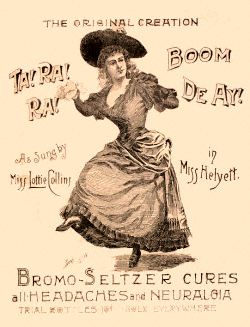
1890s advertisement for Bromo-Seltzer,
demonstrating just how you good you'll feel 
after it cures your headache
(wiki commons)


For example, in the 10th century, Ali ibn Isa al-Kahhal recommended tying a dead mole to your head.  In the 12th century, Cordobian physician Moses Maimonides advised sufferers to immerse themselves in a warm, sweet bath, using honey for preference.  In 1608, A Closet for Ladies and Gentlewomen suggested making a paste of house leek and "stamped" earthworms, and applying it to the temples.


The Head ache by George Cruickshank 1819 
(wiki commons)

Electric eels, willow bark, rose oil, hot irons, wearing a clay crocodile  on your head (an Egyptian remedy from around 1500 BCE), trepanation, feverfew tea, opium and vinegar solutions, the St Denis method*, a kiss**, patience*** - all have been proposed and practised, with varying degrees of success.

History Girls have arcane expertise spanning the centuries.  What headache remedies have you come across in your research rambles?  And have you ever tried them??? 


*detail from west facade of Notre-Dame Cathedral 
of St Denis
(Wiki Loves Monuments)


**The Headache by Robert Herrick (1591-1674)

My head doth ache,
O Sappho! take
     Thy fillet,
And bind the pain,
Or bring some bane
     To kill it.

But less that part
Than my poor heart
     Now is sick;
One kiss from thee
Will counsel be
     And physic.


***If you can live up to around bus pass age, there's a reasonable chance they'll just go away of their own accord.  At least that's what happened to me.   


Joan Lennon's website.
Joan Lennon's blog.
Walking Mountain.

Paintings of Summer - Joan Lennon

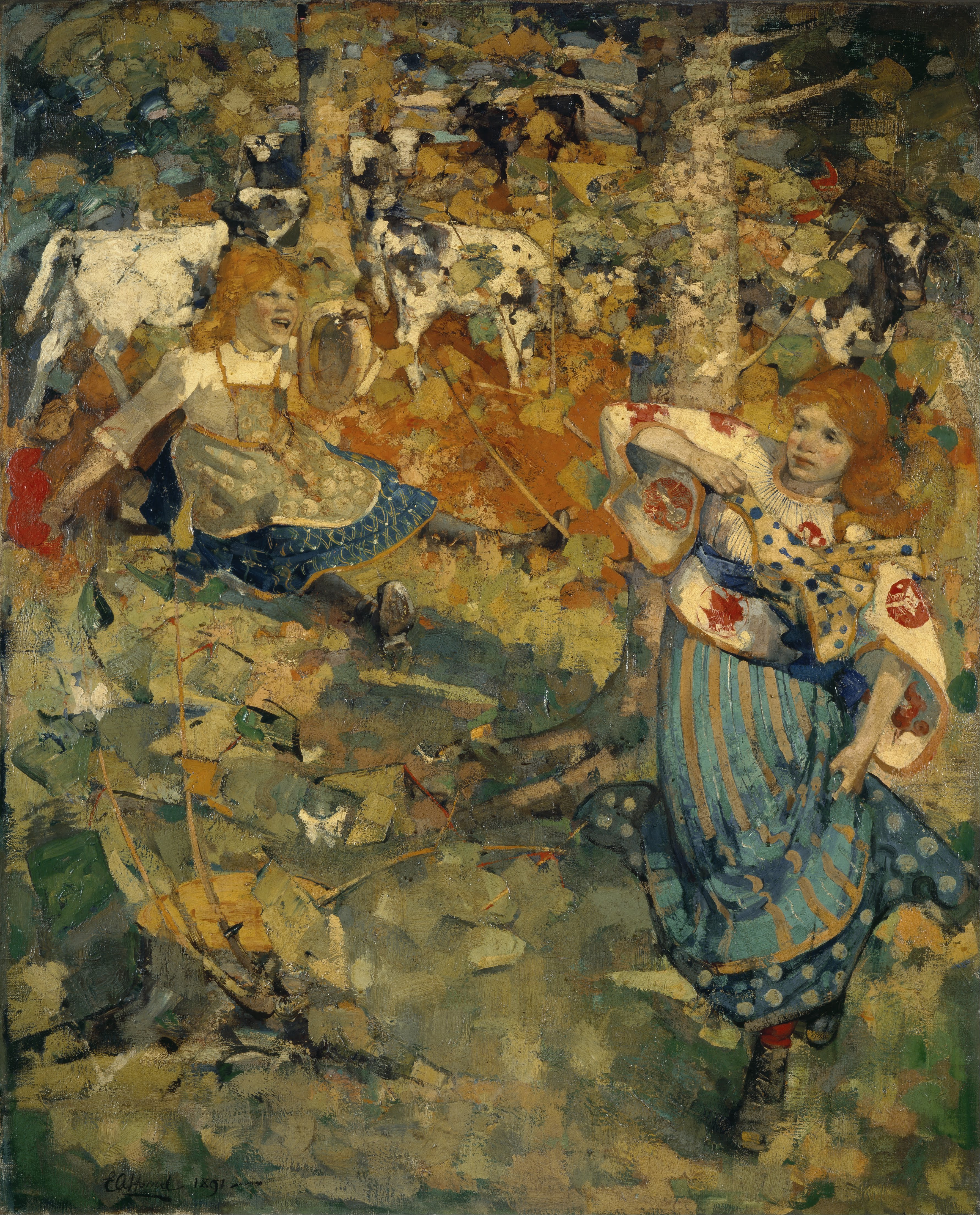
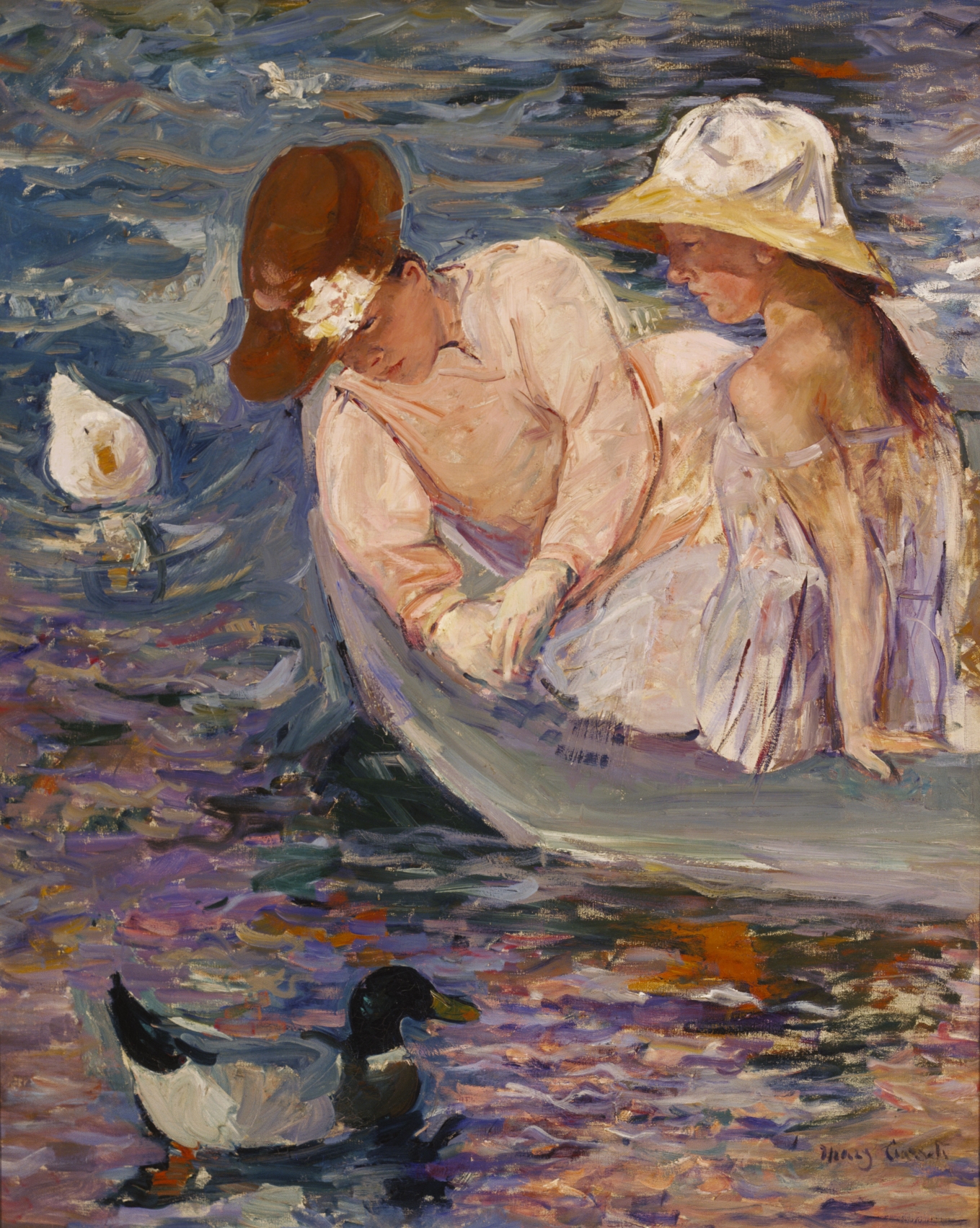
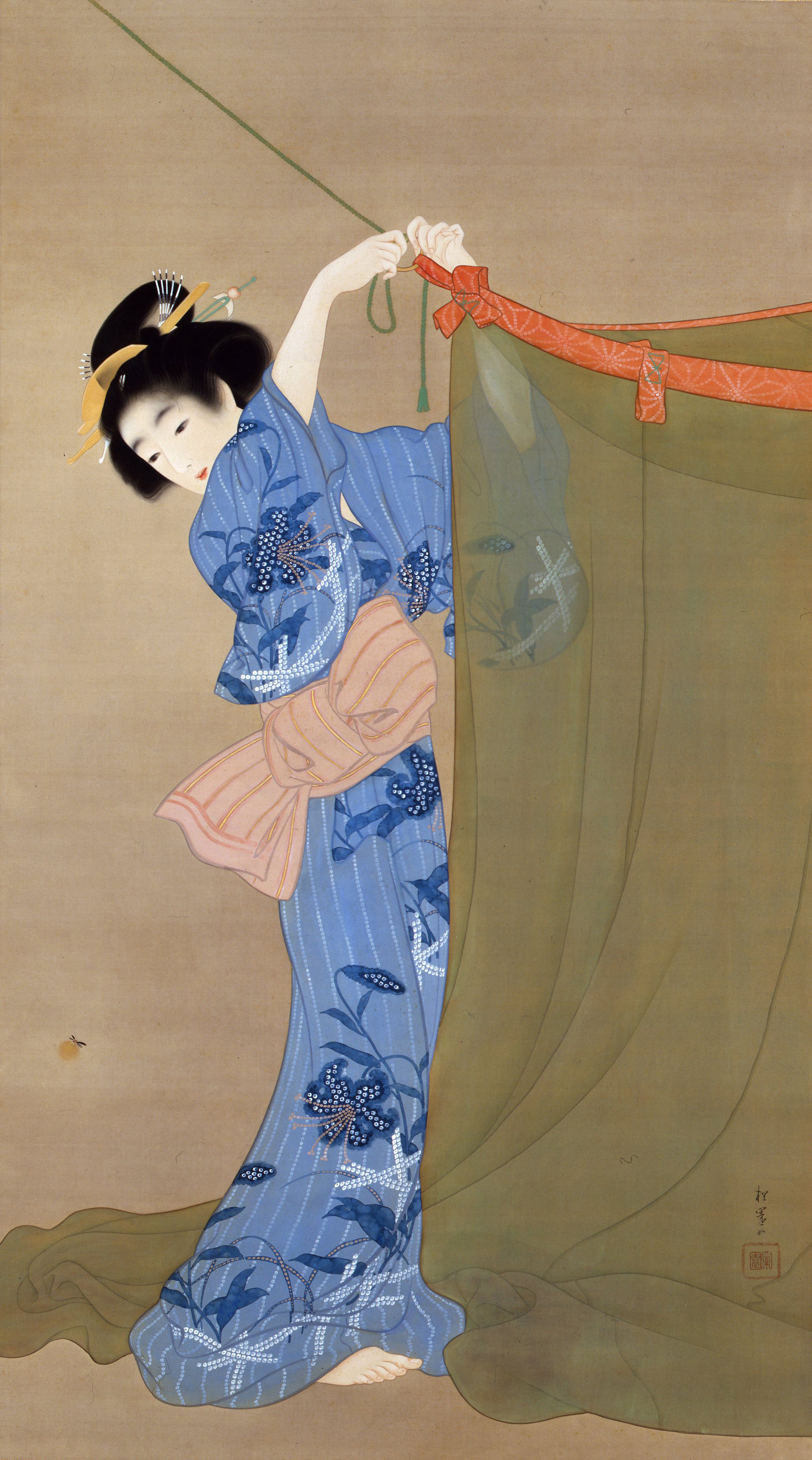
It's been a hot, dry summer.  And so I thought I'd share some paintings from hot, dry summers in the past. 


Edward Atkinson Hornel Summer 1891


Childe Hassam Summer Sunlight (Isles of Shoals) 1892


Mary Cassatt Summertime 1894


Shoen Uemura Firefly 1913


And some rain would really help.  If, by the time you read this*, we're still in need, here's a poem about summer rain to remind you of what it's like.

A drop fell on the apple tree
Another on the roof
A half a dozen kissed the eaves
And made the gables laugh

A few went out to help the brook
That went to help the sea
Myself conjectured, Were they pearls
What necklaces could be!

The dust replaced in hoisted roads
The birds jocoser sung
The sunshine threw his hat away
The orchards spangles hung

The breezes brought dejected lutes
And bathed them in the glee
The East put out a single flag
And signed the fete away

Emily Dickinson 1890


P.S. When you read this, I will be in Jakarta for my son's wedding.  Now that's hot!


Joan Lennon's website.
Joan Lennon's blog.

The Shadow Knows by Joan Lennon

My whole life, I have known this phrase: 

"Who knows what evil lurks in the hearts of men?  The Shadow knows!"  

It was one of those sayings that every family accumulates and uses, sometimes without any idea why.  I had never heard the radio dramas that my parents were quoting from, but then my niece, who is a source of many links to historical back alleys, put me on to an article in USA Today titled "The web's best kept secret?  Free classic radio dramas" and I realised The Shadow could become more than just a catch phrase for me.

The Shadow started life in Detective Story Magazine* which ran for 1,057 issues between 1915 and 1949.  Then it moved on to the airwaves in 1930 and stayed there until 1954.  Archive.org has a fabulous selection of episodes, complete with atmospheric crackling.  Organ music* punctuates the stories with melodramatic gusto, and the ads ... you really want to hear the ads!  If you weren't sure before listening to these dramas that "The weed of crime bears bitter fruit", by the end you certainly will be.


Nov. 1930 
Promotional photograph for the CBS Radio series The Detective Story Hour, the program that introduced The Shadow to radio audiences.  The character was initially played by James La Curto.


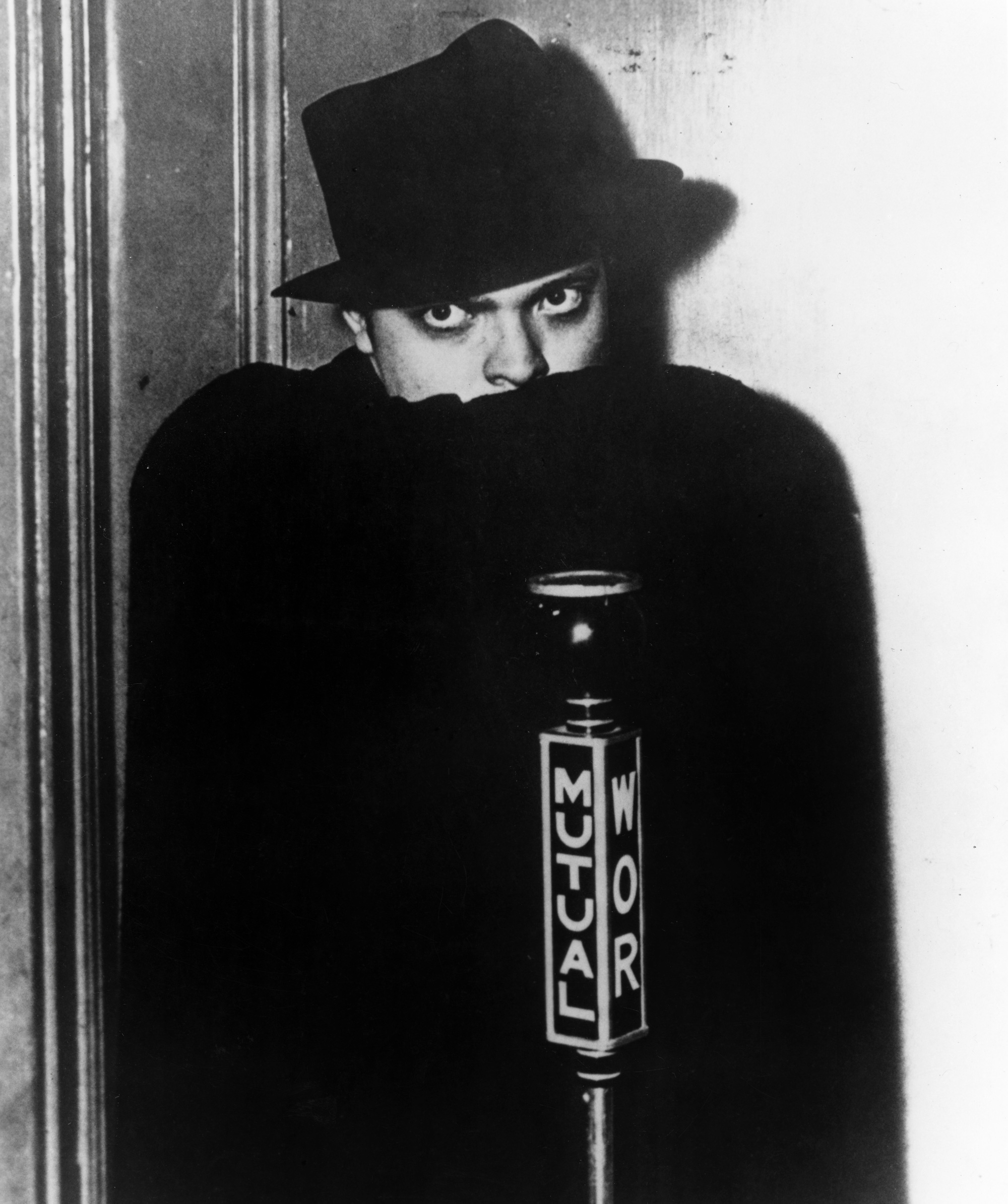
The always understated Orson Welles,
voice of The Shadow from Sept. 1937 to Oct. 1938

I am not researching a novel set in the first half of the twentieth century, neither am I planning on writing any crime fiction any time soon.  But I do have some long flights coming up this summer, and will be packing The Shadow downloads in my carry-on.  Bwah-ha-ha-ha ... 


P.S.  Of course The Shadow was not the only radio drama from the time.  More delights can be found on Archive.org and Relic Radio.  Enjoy!


* The opening music is in fact an excerpt from Saint-Saens' Le Rouet d'Omphale.

** Some Detective Story Magazine trivia - Agatha Christie and Arthur Conan Doyle both contributed to the magazine, and the philosopher Wittgenstein was part of the readership.


Joan Lennon's website.
Joan Lennon's blog.
Walking Mountain.